
To teach number bonds properly, start by helping children see how numbers split apart and come back together.
Use objects, fingers, ten frames, part-whole models and real-life examples before expecting fast recall. Children need plenty of short practice, but the understanding should come before the speed.
Children need to understand how numbers can be made from parts and split back into parts before number facts become fluent. In other words, number bonds are not just facts to memorise. They are relationships to understand.
Once children can see the relationship, the remembering has something to stick to.
What are number bonds?
Number bonds are pairs of numbers that go together to make a total.
For example, the number bonds to 10 include:
-
0 and 10
-
1 and 9
-
2 and 8
-
3 and 7
-
4 and 6
-
5 and 5
So if a child knows that 4 and 6 make 10, they can use that fact in lots of ways.
They can use it for addition:
4 + 6 = 10
They can use it for subtraction:
10 - 4 = 6
They can also use it later for mental maths, missing number questions, money, measures and problem solving.
That is why number bonds matter. They are not just another classroom target. They are one of the small building blocks that makes later maths easier.
Why number bonds can be hard
To adults, number bonds often seem obvious. We have seen the patterns so many times that we barely think about them.
Children are not there yet.
A child might know that 7 and 3 make 10 in one lesson, then forget it the next day. That does not always mean they have not listened. It often means the fact is not secure yet.
There are a few common reasons this happens:
-
the child is trying to memorise before they understand
-
they do not yet have a strong feel for number size
-
they have only seen the number bond written as a sum
-
they still need to count from one every time
-
they feel rushed and panic when asked quickly
The answer is not usually more pressure. It is better practice.
That means helping children see the numbers, move them around, talk about them, and come back to the same ideas in short, calm bursts.

Start with the whole and the parts
The most important idea behind number bonds is simple: a whole number can be split into parts, and those parts can be put back together again.
Take the number 8.
A child needs to see that 8 can be:
-
7 and 1
-
6 and 2
-
5 and 3
-
4 and 4
-
3 and 5
-
2 and 6
-
1 and 7
-
0 and 8
This is not just about learning a list. It is about understanding that the whole stays the same, even when the parts change.
That idea sits right underneath addition and subtraction.
Addition is putting parts together.
Subtraction is splitting a whole apart.
If children understand that, number bonds make much more sense.
Use real objects before written sums
If a child is struggling with number bonds, go back to objects.
You can use counters, cubes, buttons, toy cars, pasta, cereal, Lego bricks or anything else nearby. It does not need to be a special maths resource.
Start with a small total, like 5 or 10.
Put 10 objects on the table. Split them into two groups.
You might say:
“Here are 6. How many are over here?”
Then count together and say the full number bond out loud:
“6 and 4 make 10.”
Then try another split.
“Now we have 7 and 3. 7 and 3 make 10.”
This helps children see that 10 is not just one fixed thing. It can be made in different ways.
That is much more useful than giving them a page of sums too early.
Use fingers without making it a problem
Fingers get a bad reputation sometimes. They really do not need to.
For young children, fingers are a sensible way to see numbers. They are always there, they are easy to use, and they make number bonds to 10 very clear.
Ask the child to hold up 10 fingers.
Then say:
“Put 3 fingers down. How many are still up?”
The child can see that 3 and 7 make 10.
Then try it the other way round.
“Put 7 fingers down. How many are still up?”
Now they can see that 7 and 3 also make 10.
Over time, they will need their fingers less. But at the start, fingers are not cheating. They are a useful step between physical objects and mental recall.
Use ten frames to make the missing number visible
A ten frame is a simple grid with 10 spaces, usually in two rows of five.
It works well because it makes the missing number obvious.
If 6 spaces are filled, the child can see 4 empty spaces. They do not have to guess. The number bond is right there in front of them.
A simple ten frame routine could be:
-
put 6 counters on the ten frame
-
ask, “How many spaces are empty?”
-
say, “6 and 4 make 10”
-
swap it round, “4 and 6 make 10”
-
connect it to subtraction, “10 take away 6 leaves 4”
That last step matters.
Children often meet addition and subtraction as if they are separate things. Number bonds help them see that they are connected.
Teach number bonds as families of facts
One of the best ways to make number bonds stick is to teach them as a family of facts.
Take 8 and 2.
Instead of only practising:
8 + 2 = 10
Show the whole family:
-
8 + 2 = 10
-
2 + 8 = 10
-
10 - 8 = 2
-
10 - 2 = 8
This helps children understand that the same three numbers are connected.
They are not learning four completely separate facts. They are learning one relationship and seeing it from different angles.
That makes the learning much stronger.
Help children use facts they already know
Children do not need to learn every number fact as if it is brand new.
A lot of number bond work becomes easier when children learn to use facts they already know.
For example:
If they know 5 and 5 make 10, they can work out that 5 and 6 make 11.
If they know 3 and 3 make 6, they can work out that 3 and 4 make 7.
If they know 10 take away 5 is 5, they can start to reason about 10 take away 6.
This is important because children are not just chanting answers. They are thinking with the numbers.
You might say:
“You know 4 and 4 make 8. So what do you think 4 and 5 will make?”
That tiny step from a known fact to a new fact is a big part of becoming fluent.
Put number bonds into little stories
Number bonds make more sense when they are connected to real situations.
Instead of only asking:
“What is 6 + 3?”
Try:
“There are 6 apples in one bowl and 3 apples in another bowl. How many apples are there altogether?”
Or:
“There are 10 children. 4 are wearing coats. How many are not wearing coats?”
This helps children understand what the numbers mean.
The written sum matters, but it should not be the only thing children see. They need to connect the equation to a real situation, a picture, a set of objects or a simple story.
That is how the maths stops feeling like symbols floating on a page.
Keep practice short and regular
Number bonds need repetition, but they do not need long, miserable practice sessions.
For most children, little and often works better.
You could try:
-
two minutes with counters after breakfast
-
a quick number bond question in the car
-
a ten frame before homework
-
a number bond song once a day
-
asking, “What goes with 4 to make 10?”
-
spotting pairs that make 10 using snacks or toys
-
playing a quick matching game with number cards
The point is to keep coming back to it without making it feel like a test every time.
If the child is tired, frustrated or guessing wildly, stop. A calm two minutes is better than a tense twenty minutes.
Use songs and rhythm once the idea makes sense
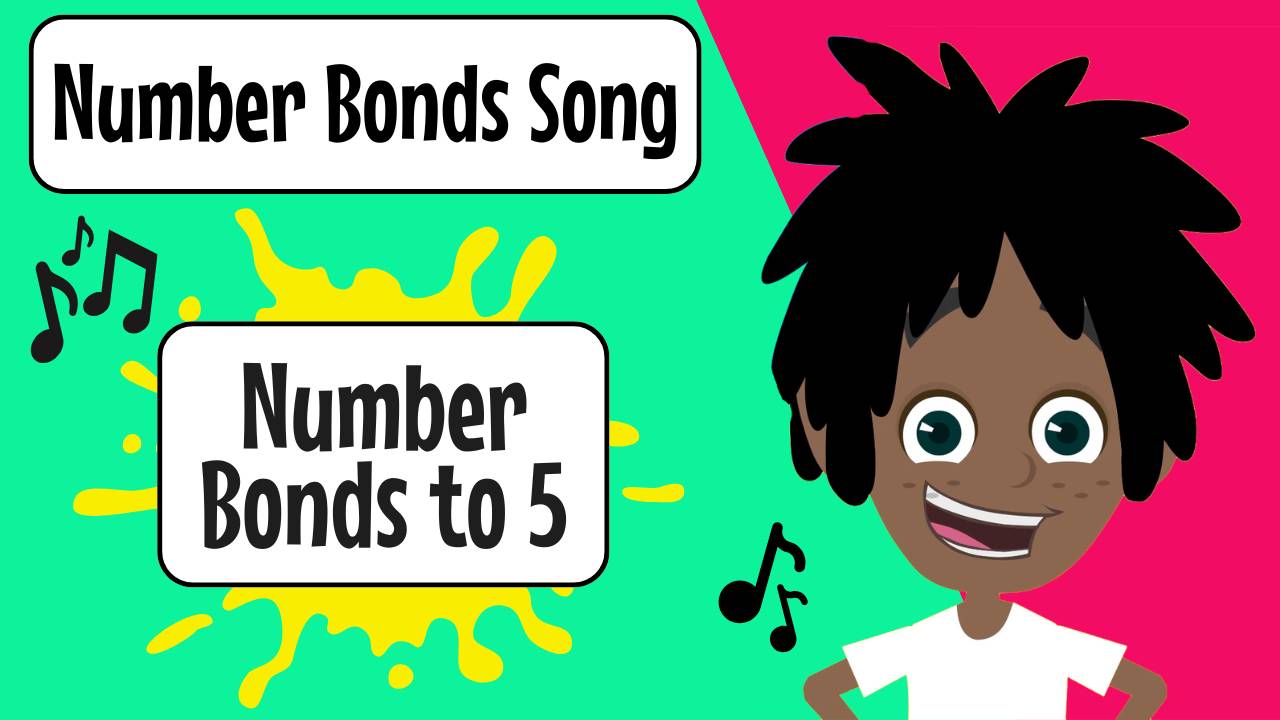
Songs can really help with number bonds, but they work best once the child has some understanding of what the numbers mean.
A song can help a child remember that 6 and 4 make 10. But they still need to have seen it, built it and understood it first.
That is the sweet spot.
Use objects, fingers and ten frames to make the number bond clear. Then use songs, chants and rhythm to help the facts become quicker.
At Silly School Education, this is how we think about maths songs. They should be short, clear and easy to repeat. Not because songs magically teach everything on their own, but because repetition is a big part of how children remember key facts.
A good maths song gives children another way to hear and practise the same idea, without it feeling like another worksheet.
What to avoid
When a child is struggling, it is tempting to push harder. That is understandable, but it can make things worse.
Try to avoid:
-
long worksheets before the child understands the pattern
-
timed challenges too early
-
saying, “You should know this by now”
-
jumping to harder number bonds too quickly
-
correcting every mistake as if it is a disaster
-
only practising sums on paper
-
turning number bonds into a daily battle
A simple correction is enough.
If the child says, “6 and 5 make 10,” you might say:
“Nearly. Let’s check it. 6 and 4 make 10.”
Then move on.
You do not need to turn every mistake into a big lesson. Sometimes the best thing is to correct gently, practise once, and keep the mood light.

How do you know if it is starting to work?
You are not looking for instant perfection. You are looking for small signs that the child is beginning to understand the pattern.
That might look like:
-
remembering one or two number bonds quickly
-
using fingers more confidently
-
spotting that 4 and 6 is the same as 6 and 4
-
using a known fact to work out a new one
-
counting on instead of counting from one
-
making fewer random guesses
-
explaining how they know an answer
A child might say, “I know 5 and 5 make 10, so 5 and 6 must make 11.”
That is a brilliant sign. It means they are not just repeating facts. They are thinking with the numbers.
When should you ask for extra help?
Lots of children need time with number bonds. That is normal.
If a child is making slow but steady progress, keep going with short, practical practice.
It may be worth speaking to their teacher if they:
-
struggle to count small groups of objects accurately
-
do not seem to understand more and less
-
find number bonds to 5 difficult after lots of practice
-
forget facts almost immediately every time
-
become very anxious around basic maths
-
seem much less secure than other children their age
That does not mean something is seriously wrong. It just means they may need a bit more support and a closer look at what is getting in the way.
Final thoughts
Number bonds are not just facts to memorise. They are relationships between numbers.
Children need to see the whole and the parts. They need to split numbers apart and put them back together. They need to talk about what is happening, use practical objects, connect the maths to little stories, and practise often enough for the facts to become fluent.
Start with real objects. Use fingers. Use ten frames. Say the number sentences out loud. Keep practice short and regular.
The remembering comes more easily when the understanding is there first.
Silly School Education has maths songs and videos designed to give children short, repeatable practice with counting, number bonds and early calculation. They work best alongside clear teaching, practical examples and plenty of low-pressure repetition.
Frequently asked questions
What age should children learn number bonds?
Children usually begin with small number bonds in the early years, such as pairs that make 5 or 10. As they get older, they move on to number bonds to 20, 100 and beyond. The exact timing varies by school and country.
Are number bonds just memorisation?
No. Children do need to remember number bonds eventually, but understanding should come first. If they only memorise them as random facts, they are more likely to forget them.
Should children use their fingers for number bonds?
Yes. Fingers are useful for early number bonds because they help children see numbers splitting and joining. Over time, children should become less dependent on them, but using fingers at the start is completely normal.
Why does my child remember number bonds one day and forget them the next?
That usually means the facts are not secure yet. They may understand the number bond in the moment, but they need more short, repeated practice before they can recall it quickly.
What is the best way to practise number bonds at home?
Use quick, practical activities. Try counters, fingers, ten frames, snacks, toys, number cards or short songs. A few calm minutes most days is usually better than one long worksheet session.
Should children learn number bonds to 10 or 20 first?
Start with smaller totals, especially 5 and 10. Once those are secure, number bonds to 20 are much easier because children can build on patterns they already know.