
Many people associate maths primarily with finding the correct answer.
A child finishes a calculation. The answer is either right or wrong. There is a tick or a cross. Everyone moves on.
But any experienced primary teacher will tell you there is much more going on than that.
Maths is not just about whether a child can get to the answer. It's about how they think, how they explain, how they spot patterns, how they deal with mistakes, and how they learn to keep going when something feels difficult.
That is why maths matters so much in primary school.
Of course children need secure number facts. They need fluency. They need accurate calculation. But good maths teaching also helps children build confidence, reasoning, resilience and problem-solving skills.
It's not just about getting it right.
It's about understanding what to do when you do not know the answer straight away.
Quick answer
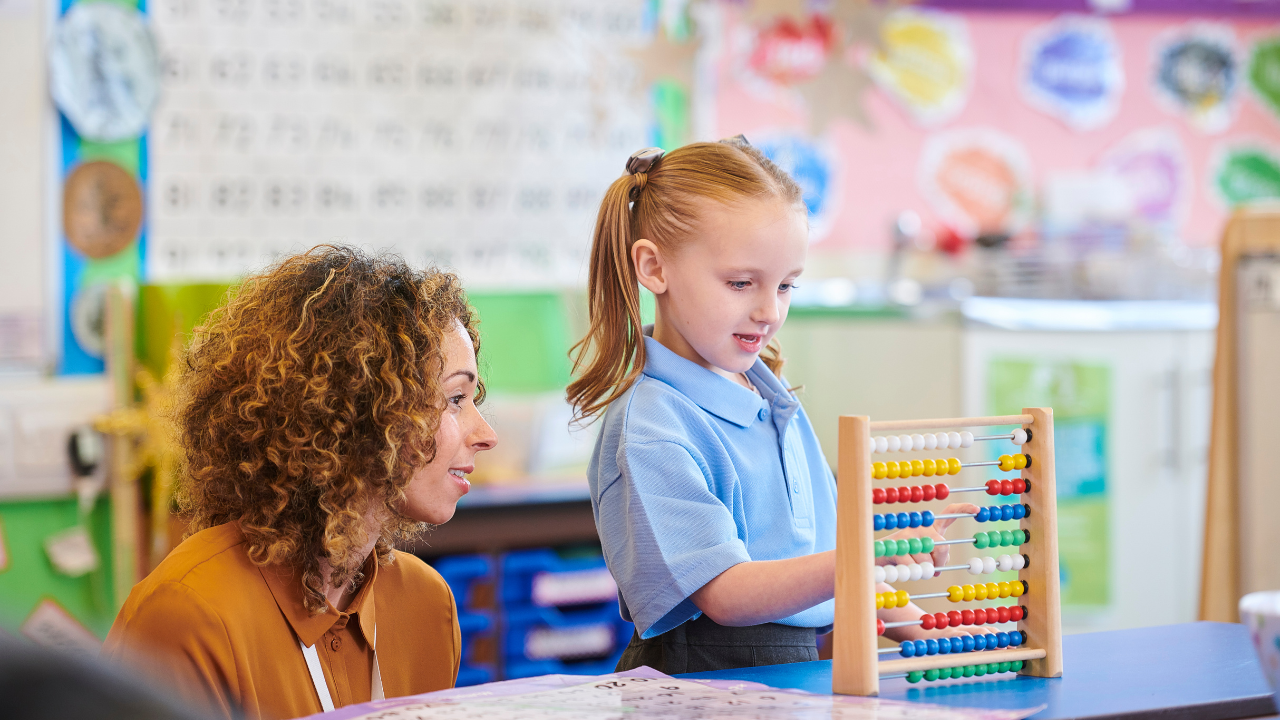
Maths matters because it helps children develop much more than calculation. It builds number confidence, logical thinking, problem-solving, pattern recognition, communication, resilience, creativity, spatial awareness and real-world understanding. Children still need fluency and accuracy, but strong maths learning is also about reasoning, explaining and making connections.
Maths teaches children how to think
One of the biggest benefits of maths is that it gives children regular practice in thinking carefully.
They have to slow down and ask themselves:
-
What is the question asking?
-
What do I already know?
-
What information matters?
-
Which strategy could help?
-
Does my answer make sense?
-
Can I show this another way?
That is a lot more than simply writing down a number.
In a strong maths lesson, children are not just copying a method. They are learning how to make decisions. They are learning to notice structure, choose an approach and check their thinking.
That kind of thinking is useful everywhere, not just in maths.
A child who can explain why 6 and 4 make 10 is doing more than remembering a fact. They are beginning to understand how numbers work together.
Maths builds number confidence
Children need to feel secure with numbers.
That does not mean being the fastest child in the class. It means understanding what numbers mean and how they connect.
For example, a child with good number sense might know:
8 is close to 10.
6 and 4 make 10.
50 is half of 100.
300 is ten times bigger than 30.
These ideas become building blocks.
They help children with addition, subtraction, multiplication, division, money, time, measure, estimating and checking answers.
This is why early maths matters so much. Counting, subitising, number bonds, place value and times tables are not separate little islands. They all connect.
When children have those foundations, they have more to draw on when maths becomes harder.
Maths helps children spot patterns
Maths is full of pattern.
Children spot patterns when they count in twos, fives and tens. They notice them in number bonds, doubles, times tables, shape, symmetry and sequences.
Pattern is one of the things that makes maths feel less random.
For example, if a child understands:
3 + 7 = 10
They can later begin to see the connection with:
30 + 70 = 100
And eventually:
0.3 + 0.7 = 1
That is powerful.
The child is not just memorising separate facts. They are starting to see structure.
That is when maths becomes easier to work with. Children realise they do not have to treat every question as completely new. They can use what they already know.
Maths develops problem-solving
Problem-solving is not an extra activity for children who finish early.
It's part of maths.
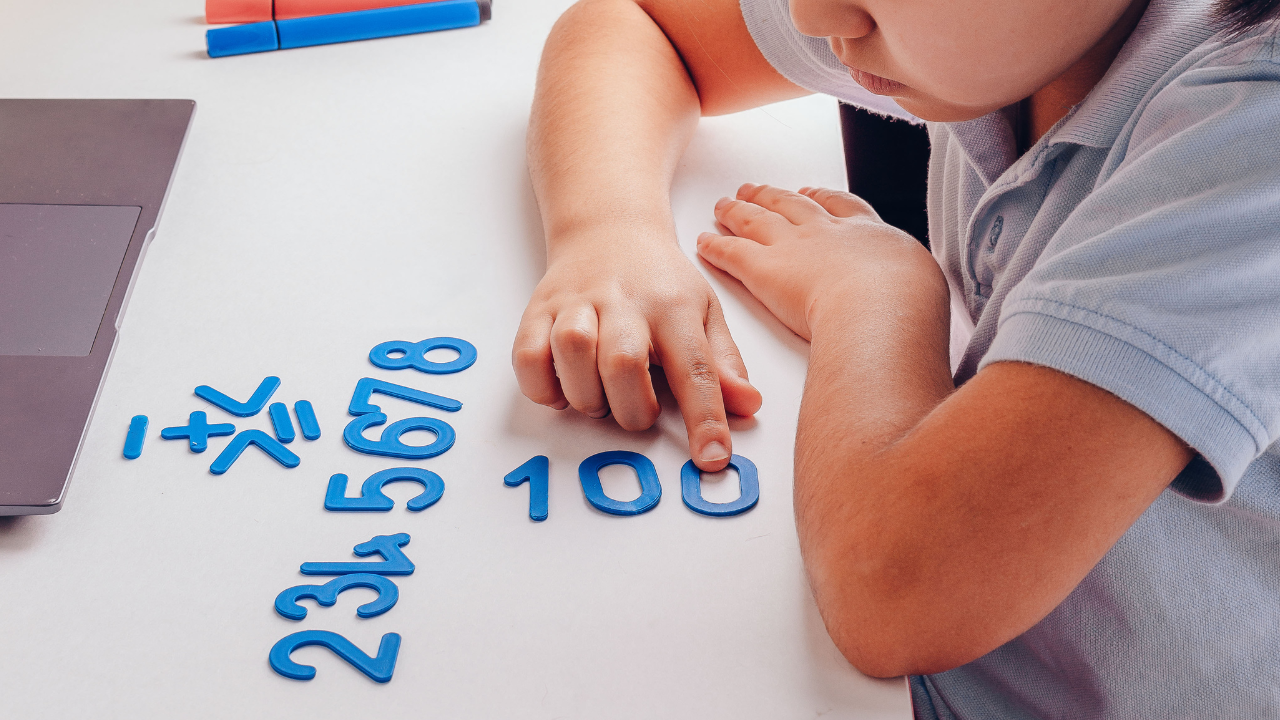
When children solve problems, they have to decide what to do. They might need to draw something, use counters, talk to a partner, try a method, realise it does not work, and try again.
That is real learning.
In the classroom, you might hear a child say:
I tried adding first, but that didn’t work.
I drew a picture to help me.
I used what I know about doubles.
I checked it another way.
Those are the moments we want.
They show that a child is not just waiting to be told the method. They are thinking.
Maths gives children a safe place to practise being stuck and finding a way forward.
Maths helps children communicate clearly
Maths is not just silent work in an exercise book.
Children need to talk about maths.
They need to explain their thinking, compare methods, listen to other ideas and justify their answers.
This matters because a child can sometimes get the right answer without fully understanding the maths. When they explain their thinking, we get a much clearer picture of what they really know.
Useful maths talk might sound like:
-
“I know this because...”
-
“I solved it a different way.”
-
“That answer can’t be right because...”
-
“I noticed a pattern.”
-
“I agree, but I used another method.”
-
“I changed my strategy because...”
This kind of talk helps children organise their thoughts.
It also gives them the language they need to reason more clearly.
Maths builds resilience
Maths can be hard.
That is not a bad thing.
Children need to learn that not understanding something straight away does not mean they cannot do it. It means they need more time, more practice, a different representation, or a different strategy.
That is where maths can build resilience.
Children learn:
-
I can try again.
-
I can use a different method.
-
I can make a mistake and fix it.
-
I can ask for help.
-
I can improve with practice.
-
I do not have to understand everything instantly.
That message is important.
Some children decide very early that they are “not a maths person”. Once that belief takes hold, it can be difficult to shift.
So the way we talk about maths matters.
Mistakes should not feel shameful. They should feel useful. They show us what to look at next.
Maths develops spatial awareness
Maths is not only number.
Shape, space and measure are a huge part of how children understand the world.
When children build towers, rotate shapes, use maps, follow directions, compare lengths, or describe position, they are developing spatial awareness.
This supports:
-
shape and geometry
-
measuring
-
map reading
-
construction
-
drawing and design
-
understanding diagrams
-
position and direction
-
practical problem-solving
That is why practical maths is so important, especially in the early years and primary school.
Children need to move things, build things, turn things, compare things and talk about what they notice.
A worksheet can be useful, but it cannot replace handling objects and seeing maths in the real world.
Maths encourages creativity
People do not always think of maths as creative, but it can be.
There is often more than one way to solve a problem.
One child might draw a diagram.
Another might use counters.
Another might use a number line.
Another might use a known fact.
Another might spot a shortcut.
That is creative mathematical thinking.
It does not mean maths becomes vague. It means children learn that there can be different routes to the same answer.
They might ask:
-
Can I show this another way?
-
Can I build it?
-
Can I draw it?
-
Can I use something I already know?
-
Can I find a more efficient method?
-
Can I explain my idea clearly?
When children share methods, they start to see maths as something they can reason about, not just something they are told to copy.
Maths connects to everyday life
Children often ask, “When will I ever use this?”
It's a fair question.
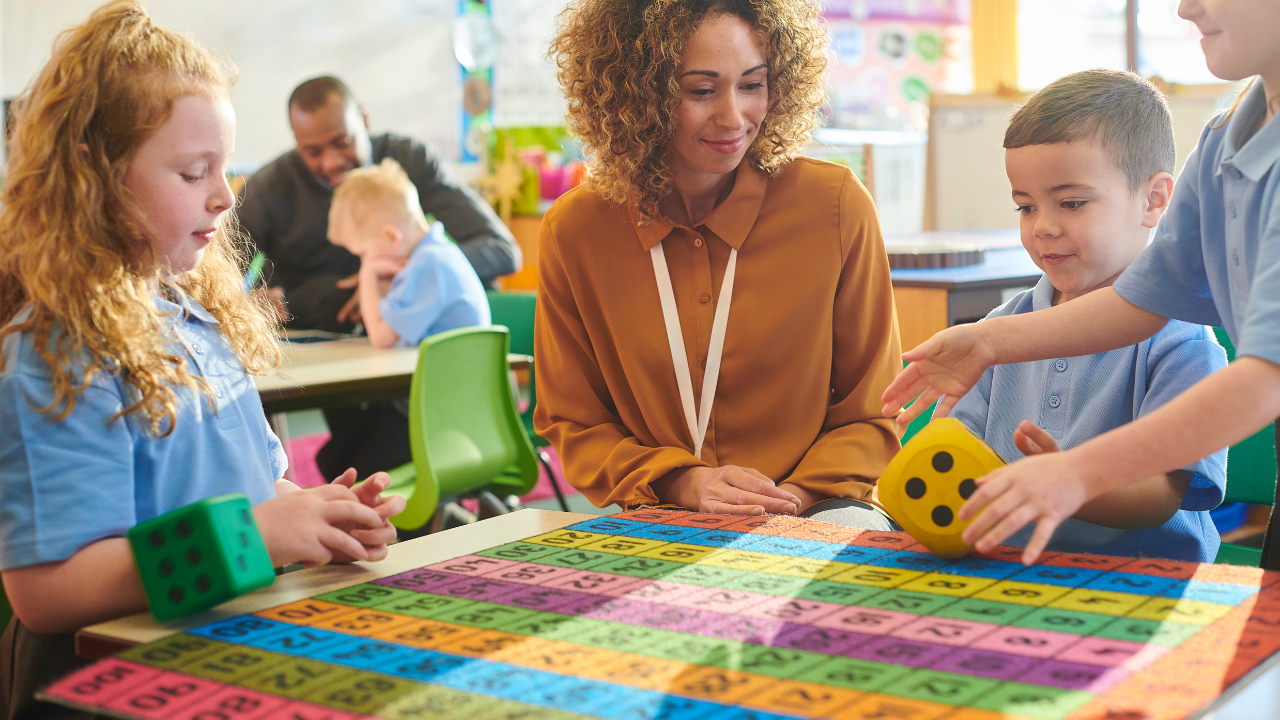
The answer is that maths appears everywhere, often in very ordinary ways.
Children use maths when they:
-
share food fairly
-
count money
-
check the time
-
follow a recipe
-
measure ingredients
-
compare prices
-
keep score in a game
-
read a timetable
-
estimate how long something will take
-
notice patterns around them
They may not call it maths, but it's maths.
This matters because children are more likely to value maths when they can see that it has a purpose.
Real-life maths does not replace classroom teaching, but it helps children understand why the learning matters.
Maths builds confidence
Confidence in maths grows through understanding.
It does not grow from empty praise. It grows when a child starts to think:
I can see how this works now.
I know a strategy I can use.
I made a mistake, but I fixed it.
I can explain my thinking.
I can try the next step.
That is why children need clear teaching, practical resources, visual models, discussion and regular practice.
Fluency matters, but fluency is not just speed. Children need accuracy, flexibility and understanding. They need to know facts, but they also need to know how those facts connect.
When children build that kind of confidence, maths starts to feel less like a test and more like something they can work with.
What adults can do to help
Parents and teachers can make a big difference by the way they talk about maths.
Instead of focusing only on whether the answer is right, we can ask questions that help children think.
Useful questions include:
-
“How did you work that out?”
-
“What do you notice?”
-
“Can you show it another way?”
-
“How do you know?”
-
“What could you try first?”
-
“Does your answer make sense?”
-
“Where did the mistake happen?”
-
“What helped you?”
These questions show children that maths is about thinking, not just guessing what the adult wants.
They also help children slow down and understand the process.
What to avoid
Some common habits can make maths feel harder for children.
Try to avoid:
-
saying “I was never good at maths either”
-
making speed the only thing that matters
-
treating mistakes as failure
-
jumping in too quickly before a child has had time to think
-
teaching tricks before children understand the idea
-
moving on before the basics are secure
-
making every maths activity feel like a test
Children pick up adult attitudes quickly.
If they hear that maths is something to fear, they may start to believe that. If they hear that maths is something you can practise, explore and improve at, they have a much better starting point.
Final thoughts
Maths is about numbers, but it is not only about numbers.
It helps children think clearly, spot patterns, explain ideas, solve problems, build resilience and understand the world around them.
Of course we want children to get answers right.
But we also want them to know what to do when they do not know the answer straight away.
That is where a lot of the real learning happens.
For teachers and parents, the aim is not to make maths feel bigger or more complicated. It's to help children see that maths is something they can explore, practise and get better at.
Silly School Education has maths songs and videos designed to support early maths understanding in a clear, memorable and engaging way. They work best alongside strong teaching, practical resources, visual models and plenty of chances for children to talk about their thinking.
Frequently asked questions
Why is maths important in primary school?
Maths is important because it helps children develop number knowledge, reasoning, problem-solving, confidence and practical life skills. It supports much more than calculation alone.
Is maths just about numbers?
No. Maths includes number, shape, space, measure, pattern, reasoning, problem-solving and communication. Numbers matter, but maths is much broader than sums.
How does maths help in everyday life?
Maths helps with time, money, cooking, measuring, shopping, sharing, reading information, comparing amounts and solving everyday problems.
Why do children need to explain their maths?
Explaining helps children organise their thinking. It also helps adults see whether they truly understand the maths, not just whether they got the answer right.
Can maths help children become more resilient?
Yes. When maths is taught supportively, children learn to try again, use different strategies, learn from mistakes and keep going when something feels difficult.
How can I help my child feel more confident in maths?
Keep practice short and calm. Use practical objects and visual models. Praise effort, thinking and improvement. Avoid saying maths is something people are either naturally good or bad at.