
Your child knows the sounds.
They can tell you that s says /s/, a says /a/ and t says /t/. But when they try to read sat, the word does not come together.
They say each sound, pause, look worried, and then guess.
If you have seen this happen, it can feel confusing. Surely if a child knows the sounds, they should be able to read the word?
Not quite.
Blending is a separate skill. Knowing letter sounds is important, but it is only the first step. Children also have to learn how to push those sounds together smoothly until they can hear the word.
The good news is that this is very common, and there are simple ways to help.
Quick answer
If a child knows letter sounds but cannot blend, they need short, regular practice pushing sounds together smoothly. Start with oral blending, then use simple two and three sound words. Keep stop sounds like t, p, c, d and b as short as possible, and stretch easier sounds like s, m, f and n when modelling the blend.

Why knowing sounds is not enough
This is the bit that catches a lot of people out.
A child can know plenty of letter sounds and still struggle to read simple words.
That is because blending asks the child to do several things at once:
-
recognise each letter or grapheme
-
remember the sound it represents
-
hold the sounds in the right order
-
push the sounds together
-
listen for the word
-
check the word after blending to see if it fits
That is a lot for a young child.
So when a child says c-a-t but cannot get to cat, it does not mean they are not trying. It means the sounds are not yet joining smoothly in their head.
They need practice with the joining part.
Start with oral blending
Before using written words, try blending without letters.
This is called oral blending. It simply means saying the sounds out loud and asking the child to hear the word.
For example:
“What word am I saying? d-o-g.”
Then help them hear it:
“d-o-g, dog.”
You can do this anywhere, and it does not need to feel like a lesson.
Try little spoken games like:
-
“Touch your l-e-g.”
-
“Can you find your h-a-t?”
-
“Point to the t-i-n.”
-
“Let’s feed the c-a-t.”
-
“Where is your b-a-g?”
The point is to help the child hear separate sounds coming together to make a whole word.
If oral blending is hard, written blending will probably be hard too. It is worth spending a bit of time here before expecting the child to read words from the page.
Keep the first words very simple
When children are first blending, keep the words short and clean.
Start with simple words like:
-
sat
-
mat
-
pin
-
tap
-
dog
-
sun
-
mum
-
bus
These words usually have three sounds. That is enough to practise the skill without overloading the child.
Do not rush into longer words like frog, black, shopping or train too early. Those words bring in extra patterns, blends or digraphs, and they can make a child feel like they are failing when the word is just too much too soon.
A good starting point is:
two sounds first, then three sounds.
For example:
am
up
in
at
Then:
sat
pin
dog
cup
Small steps work better than big jumps.
Model the blend for them
Children often need to hear what blending sounds like before they can do it themselves.
Instead of saying each sound with a big gap, model how to run the sounds together.
For example, with sat, you might say:
s...a...t
sa...t
sat
You are showing the child how the sounds get closer and closer until the word appears.
Keep it calm and repeat it a few times.
You might say:
“Listen to me first. m-a-t, ma-t, mat. Now you try.”
This is much more helpful than simply saying, “Blend it,” especially if the child does not yet know what blending feels like.
Keep the sounds as clean as possible
One common problem is that adults sometimes add an extra uh sound after consonants.
So m becomes “muh”.
s becomes “suh”.
t becomes “tuh”.
p becomes “puh”.
That makes blending harder.
For example:
muh-a-tuh does not sound much like mat.
Try to keep sounds as clean as possible:
m rather than muh
s rather than suh
t with as little extra uh as possible
p with as little extra uh as possible
Some sounds are easier to stretch than others. Sounds like s, m, f, l, r and n can be held for longer, which makes them useful for early blending.
For example:
ssssss-a-t
mmmm-a-t
fffff-u-n
Stop sounds like t, p, c, d, g and b are different. You cannot really stretch them in the same way, so the aim is just to keep the extra sound after them as short as you can.
It does not have to be perfect. It just needs to be clear enough that the child can hear the sounds joining into a word.
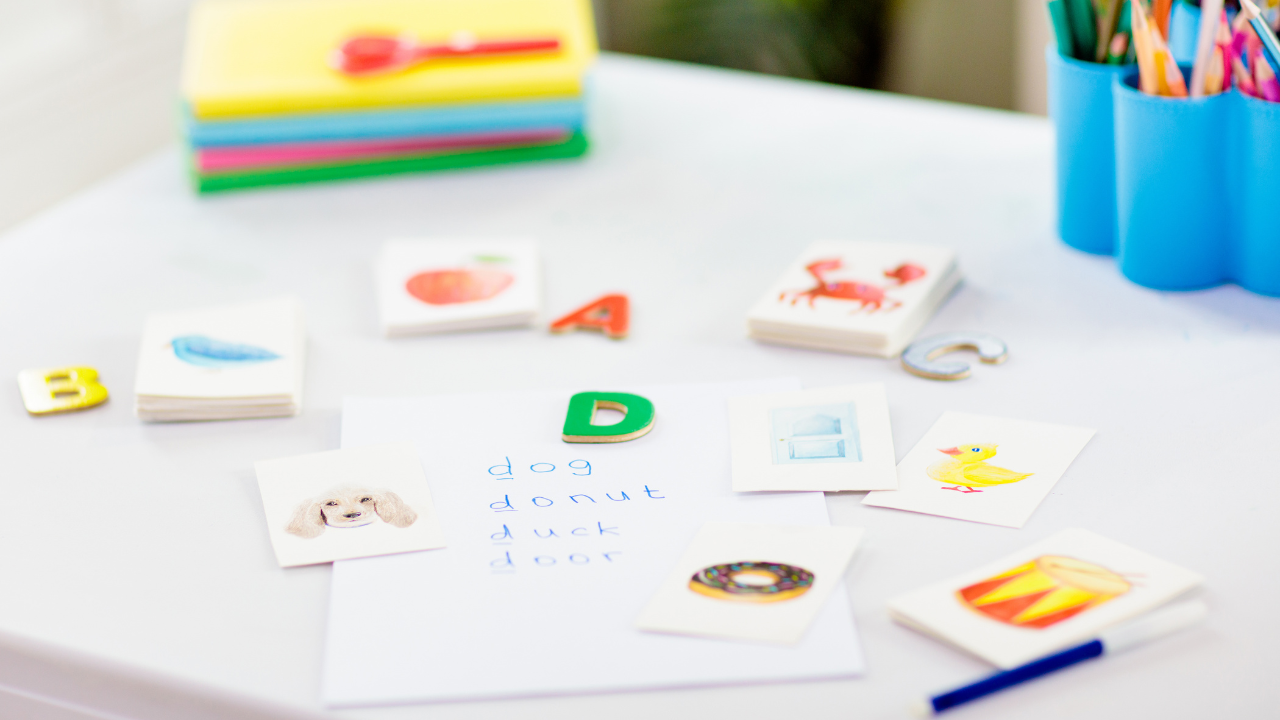
Use blending hands
Some children need a physical action to help them understand what is happening.
A simple way is to hold up one finger for each sound.
For sat:
First finger: s
Second finger: a
Third finger: t
Then sweep your hand across the fingers and say:
sat
This helps children see that the sounds are separate at first, then come together.
You can also use counters, blocks or buttons. Put one object down for each sound, then slide them together as you blend.
The objects are not the important bit. The joining action is.
Do not let guessing take over
When blending feels hard, some children start guessing from the first letter.
They see dog and say dad.
They see mat and say mum.
They see pin and say pig.
That is understandable. They are trying to make sense of the word quickly.
But guessing can become a habit, so it is worth gently bringing them back to the sounds.
You might say:
“Good try. Let’s look at every sound.”
Then point under each letter:
d-o-g
And blend it together:
dog
Keep the correction calm. The aim is not to make the child feel wrong. The aim is to help them trust the sounds rather than jump to a guess.
After they have blended the word, then you can check whether it makes sense in the sentence.
Practise little and often
Blending practice works best in short bursts.
Five calm minutes is usually better than twenty minutes of frustration.
You could try:
-
three words after school
-
one short phonics game before reading
-
oral blending during snack time
-
blending names of toys
-
reading two or three simple words from a card
-
singing a short phonics song
-
spotting simple words in a book
Stop before the child gets fed up.
It is better for them to finish thinking, “I can do this,” than to finish feeling defeated.
Make sure the words match what they have been taught
This is really important.
If a child has only learned single letter sounds, do not expect them to blend words with digraphs like sh, ch, th, ai, ee or oa.
For example, shop is not four simple sounds. It has sh at the start.
A child who has not learned sh yet may try to read it as s-h-o-p, which will not work.
So when choosing words, check that the child actually knows the sounds in them.
Good early words might include:
-
sat
-
tap
-
pin
-
tin
-
dog
-
cat
-
mop
-
sun
Words to save until later might include:
-
ship
-
rain
-
sheep
-
boat
-
chair
-
night
The right word at the right time makes a big difference.
What to avoid
When a child is struggling to blend, a few things can make it harder.
Try to avoid:
-
asking them to read words with sounds they have not learned yet
-
saying “just sound it out” again and again without modelling
-
letting every word turn into a guessing game
-
pushing through when they are tired or upset
-
using long word lists too early
-
making reading feel like a test every time
A child who is stuck does not usually need more pressure. They need the task made smaller and clearer.
Go back to simple words. Model the blend. Practise for a few minutes. Then stop.
When should you ask for extra help?
Lots of children take time to blend. That is normal, especially in the early stages of reading.
If a child is making gradual progress, even slowly, keep going with short, regular practice.
It may be worth speaking to their teacher if your child:
-
knows several sounds but still cannot blend simple words after repeated practice
-
guesses almost every word from the first letter
-
cannot hear oral blends like c-a-t or d-o-g
-
becomes very anxious whenever they try to read
-
forgets sounds very quickly
-
seems to be falling further behind over time
That does not mean something is seriously wrong. It just means they may need a closer look and more targeted support.
Final thoughts
Blending is not automatic just because a child knows letter sounds.
It is a skill in its own right.
Children need to hear sounds being pushed together, practise with short words, keep the sounds as clean as possible, and build confidence one small step at a time.
Start with oral blending. Use simple words. Model the blend clearly. Keep practice short. Give them time.
Reading starts to feel much less scary when the child realises the sounds can actually lead them to the word.
Silly School Education has phonics songs and videos covering individual letter sounds, digraphs, trigraphs and early reading skills. They are designed to give children short, repeatable practice alongside the phonics teaching they are already receiving at school or at home.
Frequently asked questions
Why can my child say letter sounds but not read words?
Because knowing letter sounds and blending them into words are different skills. Your child may know the sounds individually but still need practice pushing them together smoothly.
What is blending in phonics?
Blending is when a child pushes sounds together to read a word. For example, c-a-t becomes cat.
Should I tell my child the word if they cannot blend it?
If they are stuck, model the blending first. Say the sounds slowly, then push them together. If they are still struggling, tell them the word calmly and move on. Do not let one word become a battle.
What words should children blend first?
Start with short, simple words using sounds they already know. Words like sat, mat, pin, dog, cup and sun are good early examples.
Is guessing words normal?
Some guessing is normal, but it should not become the main strategy. If a child guesses, gently bring them back to the letters and sounds in the word.
How long should blending practice take?
Keep it short. A few minutes of calm practice most days is usually better than a long session once a week.