
Primary Science: How Teachers Can Make Lessons Practical, Purposeful and Discussion-Rich
Science can be one of the most exciting parts of the school week.
Children love seeing magnets pull objects across a table. They enjoy watching shadows move, circuits light up, seeds grow, liquids change, rocks crumble, materials stretch and balloons stick to a wall.
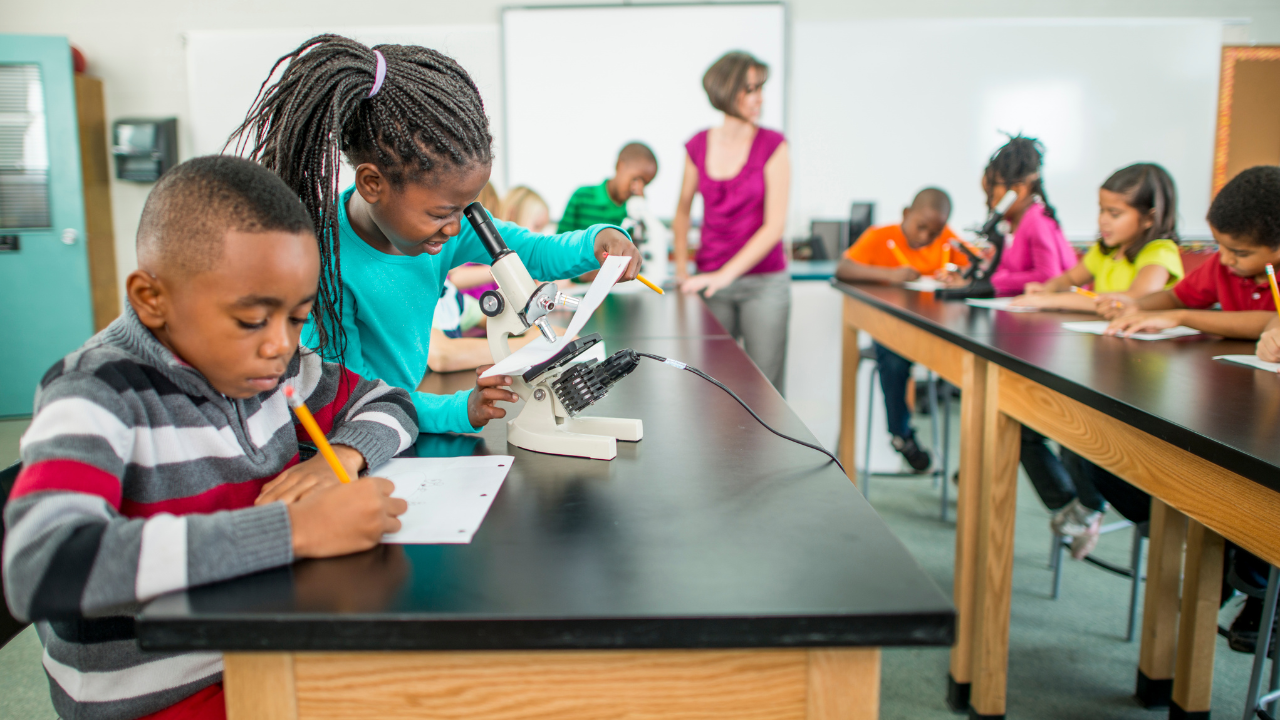
They often remember the experiment.
That tells us something.
Practical science matters.
But it only really supports learning when children understand what the activity is helping them learn.
Not because a fun experiment magically builds scientific understanding on its own.
It doesn’t.
A class can make a volcano fizz, launch a rocket, grow a plant or build a circuit and still come away with very little science if the purpose is unclear.
The key is purpose.
Good primary and elementary science helps children explore the world, use scientific vocabulary, ask better questions, explain what they notice and connect new ideas to what they already know.
That is the balance.
Quick answer
Primary science works best when practical activities, vocabulary, discussion and explanation all point towards clear learning.
Hands-on science can build curiosity and help children remember ideas, but practical work needs a clear purpose. The teacher’s role is to guide attention, teach key vocabulary, model explanation and help children connect what they do with what they need to understand.
1. Start with the science, not the activity
A practical activity is only useful if everyone is clear about what children are meant to learn from it.
That sounds obvious, but it is easy to lose.
A class might be testing materials, making shadows or building circuits. Children may be busy, interested and well behaved. The lesson may feel successful.
But the real question is simpler.
What science are they learning?
Are they learning that some materials are transparent and others are opaque?
Are they learning that a complete circuit is needed for a bulb to light?
Are they learning that shadows form when light is blocked?
Are they learning how to compare results fairly?
The activity should serve the idea.
That matters.
Useful science lessons usually have a clear learning focus, such as:
-
understanding a concept
-
observing a phenomenon
-
comparing materials
-
collecting evidence
-
practising a scientific skill
-
using new vocabulary
-
explaining a pattern
-
testing a prediction
The caution is that exciting activities can easily become the whole point.
Children might remember that “we made slime” but not explain anything about materials, states, changes or properties.
They might remember that “the rocket flew high” but not explain anything about force, air pressure or variables.
That does not mean teachers should avoid memorable activities.
It means the activity needs a clear job.
The practical task opens the door.
The teaching takes children through it.
2. Vocabulary gives children the tools to explain
Children cannot explain science clearly if they do not have the words they need.
Science vocabulary is not decoration.
It is part of the learning.
A child may understand that one object is easier to push than another, but words like force, friction, surface, grip and resistance help them explain what is happening more precisely.
A child may notice that a material lets light through, but words like transparent, translucent and opaque help them compare materials with more care.
Vocabulary gives children thinking tools.
In primary and elementary science, useful vocabulary should be taught clearly, repeated often and used in meaningful contexts.
That does not mean giving children a huge word list at the start of every topic.
It means choosing the words that matter most.
For a topic on electricity, children might need:
-
circuit
-
cell
-
wire
-
bulb
-
switch
-
conductor
-
insulator
-
complete
-
incomplete
For a topic on plants, children might need:
-
roots
-
stem
-
leaves
-
flower
-
nutrients
-
sunlight
-
water
-
germination
-
pollination
For a topic on forces, children might need:
-
push
-
pull
-
force
-
friction
-
gravity
-
surface
-
movement
-
resistance
The key is to use these words while children are thinking and doing.
“Which material was the best conductor?”
“What happened when the circuit was incomplete?”
“Which surface created the most friction?”
That kind of talk helps vocabulary become useful.
The caution is not to overload children with too many technical words too soon.
Some words need direct explanation.
Some need revisiting.
Some need linking to everyday meanings.
A child may know the word “force” from ordinary speech, but not yet understand force as a scientific idea. A child may know “attract” in everyday language, but need help using it accurately when talking about magnets.
That is normal.
Vocabulary needs time.
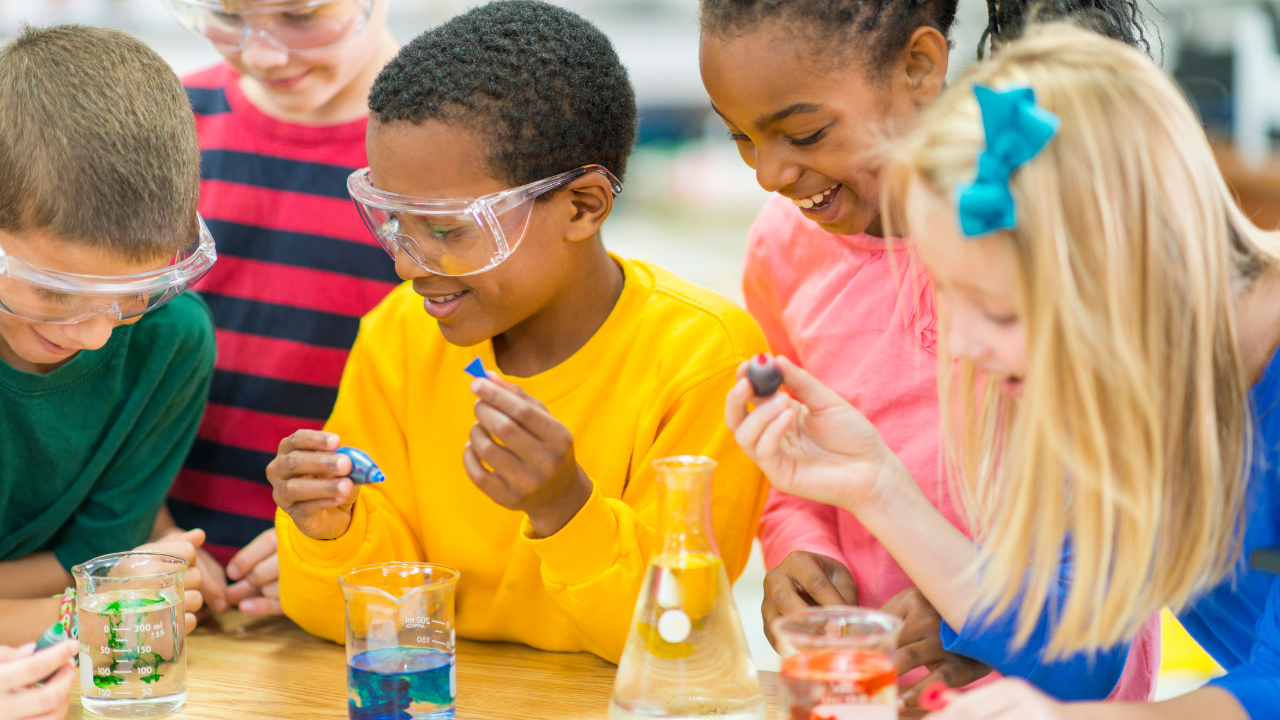
3. Practical work should help children think, not just keep them busy
Hands-on science is powerful when it helps children observe, compare, test and explain.
Children should get real experiences in science.
They need to handle materials, observe living things, use simple equipment, collect data, notice patterns and see scientific ideas in action.
That matters.
A diagram of a circuit is useful.
But building a circuit helps children see that the bulb does not light unless the pathway is complete.
A video of seed growth is useful.
But growing seeds gives children time to notice roots, shoots, leaves, water, light and change.
A teacher explanation of friction is useful.
But testing different surfaces gives children something concrete to compare.
Good practical work might ask children to:
-
observe carefully
-
compare two or more things
-
look for a pattern
-
test one change
-
collect simple data
-
use equipment safely
-
explain what happened
-
connect results to a science idea
The caution is that practical work can create too much cognitive load.
Children may be trying to manage equipment, follow instructions, share roles, record results, remember vocabulary and understand the science all at once.
That is a lot.
Sometimes the best choice is not a full investigation.
Sometimes it is a short teacher demonstration.
Sometimes it is guided observation.
Sometimes it is a carefully structured comparison.
Sometimes children need to understand the concept before they can investigate it properly.
That is not less scientific.
It is better teaching.
The practical work should support clear thinking.
4. Discussion helps children move from noticing to explaining
Science learning grows when children have time to talk through what they think and why.
Children often notice interesting things.
They might say, “It moved faster.”
They might say, “This one worked.”
They might say, “The plant near the window is taller.”
That is a start.
But science needs explanation.
Why did it move faster?
Why did this circuit work?
Why might the plant near the window be taller?
Talk helps children slow down, compare ideas and build better explanations.
Good science discussion does not need to be complicated.
It can begin with simple prompts:
-
What did you notice?
-
What changed?
-
What stayed the same?
-
What do you think caused that?
-
What evidence do we have?
-
Does anyone have a different idea?
-
How could we test that?
-
What would you change next time?
These questions matter because they help children move beyond describing.
They begin to use evidence.
They begin to compare.
They begin to explain.
That is where science becomes more than an activity.
It becomes a way of thinking.
The caution is that discussion needs structure.
A whole-class conversation can easily be dominated by a few confident pupils. Some children may copy the loudest answer without thinking. Others may have useful ideas but not the confidence or vocabulary to share them.
Teachers can support this with small routines:
-
think first
-
talk to a partner
-
use sentence stems
-
rehearse the vocabulary
-
share one agreed idea
-
challenge ideas kindly
-
connect answers back to evidence
Children do not need to sound like scientists straight away.
They need repeated chances to practise scientific talk.
5. Children need both knowledge and enquiry
Science is not just facts, and it is not just investigations. It needs both.
Children need scientific knowledge.
They need to know things about animals, plants, materials, forces, light, sound, electricity, rocks, habitats, Earth and space.
But they also need to learn how scientific knowledge is built.
They need to know how to observe carefully, compare fairly, use equipment, measure, record, identify patterns, use evidence and explain uncertainty.
These two parts belong together.
A child cannot do a useful fair test about plant growth if they do not understand that plants need water, light and suitable conditions.
A child cannot explain a shadow investigation well if they do not understand that light travels from a source and can be blocked.
A child cannot interpret a simple results table if they do not understand what was measured and why.
The enquiry should connect to the knowledge.
That matters.
Primary science should give children opportunities to work scientifically, but it should not assume that children will learn how to do this just by taking part in activities.
Working scientifically is not automatic.
Children may need to be taught:
-
what a variable is
-
why fair testing matters
-
how to measure accurately
-
how to use a table
-
how to spot a pattern
-
what evidence means
-
why results may not be perfect
-
how to explain a conclusion
The caution is not to turn every lesson into a full investigation.
Some lessons are about building knowledge.
Some are about observing a phenomenon.
Some are about practising one skill.
Some are about applying what has already been learned.
That is the balance.
Science is strongest when knowledge and enquiry work together.
6. Revisit ideas so children can build connected understanding
Science understanding builds over time, not in one lesson or one topic.
Children may meet the idea of materials in one year, then return to properties, rocks, states of matter, reversible changes and irreversible changes later.
They may learn about plants early on, then revisit life cycles, habitats, food chains, adaptation and ecosystems as they get older.
They may talk about pushes and pulls first, then return to friction, gravity, air resistance and mechanisms later.
Science is full of connections.
The problem is that children do not always make the links on their own.
Teachers often need to make them visible.
“This links back to what we learned about materials.”
“This is another example of a force.”
“We saw a pattern like this when we looked at plant growth.”
“This word has come up before, but now we are using it in a more precise way.”
That kind of revisiting helps children connect ideas.
It also helps teachers notice gaps.
If children cannot remember what a material is, they may struggle with properties.
If they cannot explain what a complete circuit is, they may struggle when switches and conductors are introduced.
If they cannot read a simple table, they may struggle to use results as evidence.
Revisiting does not need to be a long test.
It can be quick and practical.
Useful retrieval moments might include:
-
a two-minute vocabulary check
-
comparing today’s idea with a previous topic
-
revisiting a diagram
-
explaining an old experiment again
-
sorting examples and non-examples
-
using last lesson’s words in a new sentence
-
asking children what this reminds them of
The aim is not to catch children out.
The aim is to help them build stronger links.
That matters.
What teachers should avoid
Primary science becomes weaker when the activity, worksheet or resource becomes more important than the learning.
A busy science lesson is not always a strong science lesson.
A quiet written lesson is not always a weak one.
The question is whether children are learning, remembering and explaining science more clearly.
Try to avoid:
-
choosing activities just because they look fun
-
doing practical work with no clear learning purpose
-
using worksheets before children understand the idea
-
asking children to investigate before they have enough knowledge
-
expecting vocabulary to stick after one mention
-
treating enquiry skills as if they develop automatically
-
letting one confident child do all the practical work
-
giving children too many instructions at once
-
using videos without pausing, questioning or discussion
-
rushing to the written task before children have talked
There is also a common trap with “wow” moments.
A wow moment can be brilliant.
It can capture attention, create curiosity and give the class something to discuss.
But the wow moment is not the learning.
The learning comes from what happens next.
What did children notice?
What idea does it show?
What vocabulary do they need?
What explanation are they building?
What should they remember?
That is the part teachers need to protect.
A simple way to plan a purposeful science lesson
A useful science lesson starts with the learning and then chooses the best activity to support it.
-
Choose the science idea.
Decide what children need to understand by the end.
-
Choose the key vocabulary.
Pick the words children will need in order to talk and explain clearly.
-
Choose the experience.
This might be a practical activity, demonstration, observation, image, video, model or short investigation.
-
Choose the thinking focus.
Decide what children should notice, compare, test or explain.
-
Plan the teacher talk.
Prepare the short explanation, modelled sentence or key question that will guide the learning.
-
Give children time to talk.
Let them rehearse ideas before expecting written answers.
-
Connect back to the science.
End by linking the activity clearly to the concept, vocabulary and explanation.
This keeps the lesson focused.
It also helps avoid the common problem where children enjoy the activity but miss the science.
The aim is not to make every lesson complicated.
The aim is to make every lesson purposeful.
How Silly School Education can support science teaching
Resources can help when they support the teacher’s purpose, not when they replace it.
Songs, videos, animations and downloadable resources can be useful in primary and elementary science.
They can introduce vocabulary, show processes that are hard to see in real time, support memory, provide a shared starting point and give children something clear to talk about.
A video might help children see how a habitat changes across seasons.
A song might help them remember key words linked to plants, materials or forces.
An animation might show something too small, too slow, too large or too dangerous to observe directly in class.
That can be helpful.
But the adult still matters.
The teacher decides the purpose.
The teacher pauses and questions.
The teacher links the resource to the lesson.
The teacher checks what children understood.
The teacher brings children back to the science.
Silly School Education is designed to support that kind of teaching. The songs, videos and resources can help children meet vocabulary, remember ideas and engage with science in a simple, memorable way.
They work best alongside clear explanation, hands-on experience, discussion and purposeful follow-up.
The resource supports the learning.
The teacher makes it meaningful.

Final thoughts
Good primary science is practical, but it is not just practical.
It needs real experiences.
It needs clear vocabulary.
It needs discussion.
It needs explanation.
It needs careful adult guidance.
It needs time for children to revisit ideas and connect them together.
A science lesson does not have to be loud, messy or spectacular to be valuable.
And a practical lesson does not have to be complicated to be scientific.
The best science teaching helps children look at the world more carefully and explain it more clearly.
That is the balance.
Frequently asked questions
Here are the short answers teachers may need when planning primary or elementary science.
What makes a good primary science lesson?
A good primary science lesson has a clear science idea, useful vocabulary, purposeful activity, teacher guidance, discussion and a chance for children to explain what they have learned.
Should every science lesson include a practical activity?
No. Practical work is important, but not every lesson needs a full hands-on investigation. Sometimes a demonstration, discussion, model, image, video or explanation is the better choice.
How can teachers make practical science more purposeful?
Start with the learning. Decide what children should understand, what vocabulary they need and what the activity is helping them notice, test or explain.
Why is vocabulary so important in science?
Vocabulary helps children describe, compare and explain scientific ideas more accurately. Without the right words, children may notice something but struggle to explain what it means.
What is the difference between knowledge and enquiry in science?
Knowledge is what children learn about the world, such as plants, materials, forces or light. Enquiry is how children learn to work scientifically, such as observing, measuring, testing, recording and using evidence.
How can teachers support scientific discussion?
Teachers can use simple prompts, partner talk, sentence stems and clear vocabulary. Children need time to rehearse ideas before they are expected to explain them in writing.
Are videos and songs useful for teaching science?
Yes, they can be useful when they support clear teaching. They can introduce vocabulary, show difficult concepts and support memory, but they should be used with discussion, explanation and real-world links.
What should teachers avoid in primary science?
Teachers should avoid choosing activities just because they look fun, overloading children with too much vocabulary, using worksheets too early, or assuming children will understand the science just because they completed the activity.