
Reading at home does not need to feel complicated.
You do not need to turn every book into a lesson. You do not need a clipboard, a reading voice, or a long list of questions. You definitely do not need to stop your child every three seconds to check they have understood every word.
Most of the time, the best thing you can do is much simpler.
Sit together. Share the book. Talk about it. Keep it calm.
That might not sound very dramatic, but it makes a real difference. Short, regular reading at home helps children build confidence, fluency and understanding. It also helps them see reading as something normal, enjoyable and worth doing.
This guide gives you a simple way to support your child with reading at home, without making story time feel like homework for everyone involved.
Quick answer
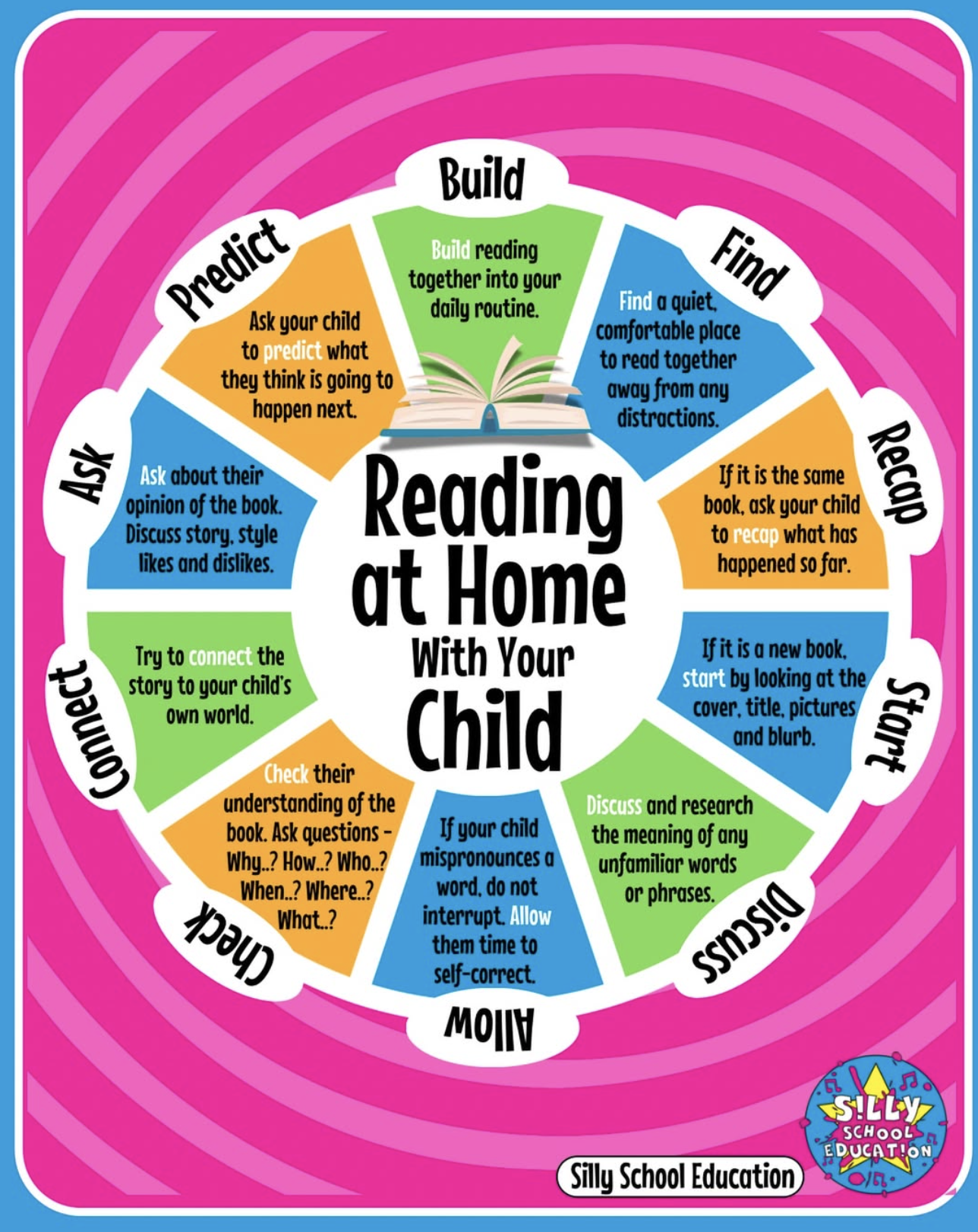
To help your child read at home, find a quiet place, make reading part of your routine, look at the book before you start, ask simple questions, talk about tricky words, give your child time to correct themselves, and keep the whole thing positive. Little and often is usually better than one long, stressful reading session.
Find a quiet place to read
Children read better when they can actually hear themselves think.
That does not mean you need a perfect reading corner with cushions, fairy lights and a personalised bookmark. Lovely if you have one, but not essential.
A sofa, bed, kitchen table or quiet corner is absolutely fine.
Try to choose somewhere with fewer distractions. If the television is on, a tablet is buzzing, or a sibling is crashing around with a toy dinosaur, reading is going to be harder.
A good reading spot is usually:
- quiet enough to concentrate
- comfortable enough to relax
- away from screens if possible
- somewhere you can sit together
- easy to use regularly
Some children can read anywhere. Others need things to be a bit calmer. If your child finds reading difficult, the space around them can make a big difference.
Build reading into your routine
Reading works best when it becomes a normal part of the day.
It does not have to be a big event. In fact, it is usually better if it is not.
Ten calm minutes most days is often more helpful than one long session that ends with everyone fed up.
You might read:
- after school
- before bed
- after dinner
- in the morning at the weekend
- while waiting for a sibling at an activity
- after bath time
- before screen time
The exact time does not matter as much as finding a rhythm that works for your family.
If reading always happens at roughly the same time, children know what to expect. That can make it feel less like a battle and more like a habit.
And if you miss a day, do not panic. Just pick it up again the next day.
Start by looking at the book
Before your child begins reading, spend a minute looking at the book together.
This is especially useful if it is a new book.
Look at:
- the front cover
- the title
- the pictures
- the blurb
- the characters
- any words that stand out
You might ask:
“What do you think this book might be about?”
“Who do you think that character is?”
“Where do you think the story is happening?”
This helps your child get ready for reading. They start to think about the story before they even read the first sentence.
It also makes reading feel more natural. Adults do this too. We look at covers, titles and pictures before deciding what something might be about.
Predict what might happen
Prediction is a simple way to help children think while they read.
Before you start, ask:
“What do you think might happen?”
As you read, you can pause and ask:
“What do you think will happen next?”
The prediction does not need to be right. That is not the point.
The point is that your child is using clues. They are thinking about the characters, the pictures, the title and what has already happened.
You can respond with:
“That’s a good idea. What made you think that?”
Or:
“Let’s read on and find out.”
This keeps the conversation light. It should feel like chatting about the book, not being tested on it.
Recap if you are continuing a book
If you are reading the same book over a few days, start by recapping.
Ask:
“What happened last time?”
“Where did we get to?”
“Who was in the story?”
“What do we remember so far?”
This is useful because children often forget details between reading sessions. A quick recap helps them get back into the story.
It is especially helpful with longer books or chapter books.
You do not need a full summary. Just a minute or two is enough.
Allow time for self-correction
When your child gets stuck on a word, it is very tempting to jump in straight away.
Sometimes they do need help. But sometimes they just need a moment.
If they misread a word, pause briefly. They may notice that it does not sound right and fix it themselves.
That is a really good thing.
Self-correction shows that your child is checking what they read. They are thinking:
Does that look right?
Does that sound right?
Does that make sense?
You can gently prompt them with:
“Have another look at that word.”
“Try that sentence again.”
“Does that sound right?”
Try not to interrupt too quickly. A short pause gives your child the chance to think and build confidence.
Talk about tricky words
If your child comes across a word they do not know, stop and talk about it.
This does not need to become a dictionary lesson.
A quick explanation is often enough.
For example:
“Enormous means really, really big.”
“Whispered means said it very quietly.”
“Nervous means a bit worried or unsure.”
You can also use the sentence or picture to help.
Ask:
“What do you think that word might mean?”
“Can the picture help us?”
“Have you heard a word like that before?”
This helps your child build vocabulary. It also reminds them that reading is not just about saying the words. It is about understanding what they mean.

Check understanding gently
It is useful to check that your child understands what they are reading.
But it should not feel like a quiz.
You do not need to stop on every page and fire questions at them. A few natural questions are enough.
You might ask:
- “What has happened so far?”
- “Why do you think they did that?”
- “How do you think the character feels?”
- “Where is the story happening?”
- “What do you think might happen next?”
- “What was your favourite part?”
These questions help your child think about the story.
They also help you notice if your child is reading the words but not really following what is happening.
Ask for their opinion
Children do not have to like every book.
That is worth remembering.
Sometimes adults are so focused on whether a child can read the words that we forget to ask what they actually think.
Try asking:
“Did you enjoy that?”
“Which part did you like best?”
“Was there anything you didn’t like?”
“Would you choose another book like this?”
“Who was your favourite character?”
This helps children become more thoughtful readers. It also shows them that books are there to be enjoyed, discussed and sometimes disagreed with.
Not every book will be a favourite, and that is fine.
Connect the book to real life
Children often understand books better when they can connect them to things they already know.
You might say:
“That reminds me of when we went to the beach.”
“Have you ever felt like that character?”
“This story is about being brave. Can you think of a time when you had to be brave?”
These little links help children make sense of what they are reading.
They also make reading feel more personal. The story is not just words on a page. It connects to feelings, memories and real experiences.
What to do if your child finds reading hard
Some children love reading at home. Some do not.
Some are tired after school. Some worry about getting words wrong. Some can read the words but struggle to understand the story. Some would rather do almost anything else.
If reading feels hard, keep it short and kind.
You could try:
- taking turns to read
- reading one page each
- letting your child read a shorter section
- rereading a familiar book
- choosing a book with more pictures
- stopping before they become upset
- praising effort, not just accuracy
Helpful things to say include:
“You worked really hard on that page.”
“I liked how you went back and fixed that word.”
“That was tricky, but you kept going.”
Confidence matters. A child who feels safe to try is much more likely to keep going.

What to avoid
A few things can make reading at home feel harder than it needs to be.
Try to avoid:
- turning every reading session into a test
- correcting every mistake immediately
- reading for too long when your child is tired
- comparing your child with other children
- getting cross when they forget a word
- choosing books that are too difficult every time
- making reading feel like a punishment
Children need practice, but they also need to feel that reading is something they can get better at.
A calm reading routine is much more useful than a perfect reading session.
A simple reading routine to follow
Here is an easy structure you can use at home.
- Look at the cover, title and pictures.
- Ask what your child thinks the book might be about.
- Read a short section together.
- Pause for tricky words and explain them simply.
- Give your child time to correct themselves if they make a mistake.
- Ask one or two questions about what happened.
- Let your child say what they liked or noticed.
- Praise the effort and stop before it becomes too much.
You do not need to do every step every time.
It is just a simple pattern to come back to when you are not sure what to do.
Final thoughts
Reading at home does not need to be perfect.
It just needs to be regular, calm and shared.
Find a quiet place. Build reading into your routine. Talk about the book. Let your child predict, ask questions, work out words, make mistakes and share opinions.
Some days will go well. Some days will be harder. That is normal.
The aim is not to create a perfect reading performance every night. The aim is to help your child feel more confident with books, one small reading moment at a time.
Silly School Education has phonics songs, grammar videos, Word of the Day content and reading-friendly resources that can support children alongside regular reading at home. They work best when children also get plenty of time to read, talk and enjoy books with adults.
Frequently asked questions
How long should my child read at home each day?
For many children, ten to fifteen minutes is enough. Short, regular reading is usually better than one long session that becomes stressful.
Should I correct every reading mistake?
No. Give your child a moment to notice and self-correct. If they do not, gently help them. Try not to interrupt so often that they lose the flow of the story.
What should I do if my child does not want to read?
Keep it short, choose easier or more familiar books, take turns reading, and try to make the session feel calm. If reading is always stressful, speak to your child’s teacher for advice.
Is it okay to read the same book more than once?
Yes. Rereading can build confidence, fluency and expression. Familiar books can be especially helpful for children who find reading difficult.
Should my child read aloud or silently?
Both are useful. Younger children usually need to read aloud so adults can hear how they are getting on. As they become more confident, silent reading can also be part of their routine.
How can I help my child understand what they read?
Talk about the book. Ask what happened, how characters feel, what might happen next, and what your child liked or noticed. Keep questions natural rather than turning it into a quiz.